Unlike games unc… – Remus Capital

Unlike games unc…

Sign up for our newsletter

periscope | April 19, 2022

Many players let made a fault of depositing their money without checking their detachment options, just to learn that they’re stuck with a minor sum of cash.

You can likewise receive chump bets in about games. These bets can be as low as 7.4% in blackmail, and as high-pitched as 9.53 pct in craps. It’s crucial to cognise that these bets gestate the whip odds for you. The better way to belittle these risks is to bet the uttermost measure of cash potential. E.g., if you’re card-playing with cash, you should lonesome bet the utmost come.

http://www.gamelib.com.br/forum/pc/games/one-of-the-best-online-casinos/

If you’re performing for real money, you’ll neediness to prefer a website that accepts real up-to-dateness. Almost online casinos let you take the up-to-dateness you deprivation to turn with, so you can prime CAD or USD for Canadians. So, check the unlike games uncommitted.

Posted in Uncategorized

The Value of Forming Long-Term Partnerships with Investors at the Earliest Stages

The Value of Forming Long-Term Partnerships with Investors at the Earliest Stages

Sign up for our newsletter

Cavin Mozarmi | November 11, 2020

Image credit: ‘One and One Chair’ by Ashley Zelinskie

When we invest at the pre-seed or seed stage at REMUS, it is with the intention of both creating a long-term partnership and investing in the following rounds — all in the spirit of ‘building not betting.’ This strategy creates many benefits for founders at the early stages, and when executed correctly, it can mitigate many potential risks.

Preventing Negative Signaling

One potential risk of having an investor that invests across stages participate at the pre-seed or seed round is that there is a negative signaling effect if the fund chooses not to follow on for subsequent rounds. The effect arises when new investors look at the upcoming round and question why an insider investor isn’t deploying more capital into the company, whether by declining to exercise their pro rata or choosing not to lead the next round. This is why a fund that sprays and prays at the pre-seed and seed stages can be detrimental to a founder’s ability to fundraise in the future.

This negative signaling effect is of course removed if the fund does invest in subsequent rounds. The chance of this happening increases if the fund takes a highly concentrated approach at the pre-seed and seed stages, takes the time to build the conviction required to want to form a long-term partnership, and focuses on company-building, not betting. 

This is what we do at REMUS. If we write a pre-seed or seed check and do not make subsequent investments, we view that as a failure on our part and not a part of our overall portfolio strategy. We spend meaningful time upfront to ensure alignment with founders, and we continue to strengthen that alignment after we invest, as we have strong incentives to see each company succeed.

Preventing Cap Table Consolidation

There is a second potential risk of having the same lead investor across multiple rounds: reduced cap table diversity. A varied base of investors with significant ownership is beneficial to founders, who will have multiple sources of capital as well as more partners to help with company-building. For early stage investors that invest across rounds, leading the Series A is usually the goal to achieve a high amount of ownership and to secure a board seat. 

At REMUS, we may lead both the Seed round and the Series A, but we won’t lead any subsequent rounds in the same company. We’re able to gain significant ownership in a company and invest significant amounts of capital and time through this approach while allowing for cap table diversity as a company scales. 

There are many additional benefits for founders who form long-term partnerships with investors early on in their entrepreneurial journeys, and we have seen that the benefits far outweigh the potential risks when executed correctly.

1. Working with Investors Before Fully Committing

First, founders are able to spend significant time getting to know their investors and, more importantly, actually working with them before allocating a big spot on their cap table. A lead investor is, after all, a person with whom founders can carry a relationship that can last a decade or more. Founders want to be certain this is the right long-term business partner, and this is even more relevant for first-time entrepreneurs.

2. Helping with Company-Building from Day One

Second, pre-seed or seed investors tend to have larger, less concentrated portfolios and thus are forced to spend less time with each portfolio company. Investors who are forming long-term partnerships with founders at the early stages are in the process of company-building, and they’re also investing their time — which is significantly more valuable than just capital. By taking a company-building approach, investors can add value to founders by making customer introductions, helping with hiring, developing board strategy, and making intros to future investors. 

3. Avoiding Emergency Situations

Third, having an investor on the cap table with deep pockets early in a company’s life can potentially provide emergency insider capital. This is especially relevant when the company is going through tumultuous times or there’s a difficult macroeconomic climate that may make raising outsider capital challenging. The former occurs when a company hasn’t achieved the requisite traction or product development milestones, but the existing inside investors have strong conviction in the founders and business. The latter scenario is what founders feared at the start of COVID, and what usually occurs after the end of a bubble. 

Investors who focus exclusively on the pre-seed or seed stages bring their own value to founders and complement others on the cap table with longer-term ambitions. Ultimately, though, what matters most is not the size of the fund joining your cap table and the resulting dynamics, but rather the fund’s track record in being consistent partners to its portfolio companies in good times and bad. The character, experience, and knowledge of the investors at a fund will have the greater impact on the company.

Posted in Uncategorized

The RNG is responsible – Remus Capital

The RNG is responsible

Sign up for our newsletter

periscope | April 25, 2022

The options uncommitted to you are dateless. The prime is wholly capable you, and you can obtain one that suits your fashion and budget. This is an nonesuch way to receive the bang of a subsist casino without the fuss.Among the many games useable https://www.podomatic.com/podcasts/gersonlarkin11/episodes/2022-02-08T15_00_49-08_00 to players at online casinos, slots are arguably the almost pop selection.

Careless of whether you are a initiate or an advance histrion, you can frolic casino games at the scoop online sites.Thither are legion variations of the classics alike blackmail, roulette, and baccarat. You can caper a form of postpone games, including Caribbean Macho-man, Let It Razz, and Let It Rally. Craps is another democratic exist casino gamey, and is a real societal activeness.

The engineering bum online casinos allows players to model the like layer of fervor as they would at a traditional casino. Slots are uncommitted online in the US, so players from otc countries can feel the like rather thrills. The scoop real money casinos testament lineament more one reading of slots, so you can discovery a biz that suits your preferences.

As far as certificate and dependableness are interested, you can swear on the third-party organizations that mold online casinos. Third-party audits piddle trusted that the games are comely and random. The RNG is responsible creating a story field for all players and is a key part of any reputable casino. Restitution to histrion is an authoritative component to sustenance in nous when choosing an online casino.

Posted in Uncategorized

The Building Blocks of Virtual Primary Care – Remus Capital

The Building Blocks of Virtual Primary Care

Sign up for our newsletter

Cavin Mozarmi | October 7, 2020

Image credit: ‘Platonic Solids’ by Ashley Zelinskie

COVID-19’s Impact on Virtual Care

The proliferation of COVID-19 and the resulting response from the US government have accelerated the flow of capital into both virtual care and healthtech platforms. Consumers have been opting for and experimenting with online visits while the government has relaxed healthcare regulations in favor of virtual care.

The effects of the pandemic are causing a behavior shift in both patients and providers. The pandemic has catalyzed patient downloads of virtual care applications several years earlier than anticipated, and providers are becoming accustomed to videoconferencing with patients and diagnosing online. This accelerating adoption of virtual care applies not just to urgent care, but to primary care as well.

The two most significant regulatory changes influencing virtual care are 1) expanding licensure rules to allow providers to care for patients across state lines and 2) instituting equal reimbursements for telehealth and in-person visits. Software enables massive distribution and, amid reduced regulation, is unlocking supply (providers) in the healthcare space. To what extent payers continue to reimburse for virtual visits after the pandemic ends will depend on a data-driven analysis of their ROI over an extended period of time.

Greater access to virtual care providers and improved economics, however, is necessary but insufficient for virtual primary care to reach a comparable quality of care than its in-person alternative. It will require a significant buildout of technological infrastructure over the next decade. Founders are well positioned to build these new companies that are focused on the virtual primary care market from day one.

The State of Virtual Urgent Care

This trend toward virtual care will continue to take an increasingly large cut out of traditional brick and mortar practices. The rate will depend on the advancement of foundational technology like videoconference networking and internet connectivity, which still proves problematic, especially in rural markets. Both will be improved with the expansion of 5G and fiber internet. Physicians diagnosing virtually also require the ability to measure vitals at discrete times. And fortunately, thermometers and blood pressure cuffs are becoming more common in US consumer households.

The next layer of technology virtual care companies need to provide a high quality of care includes tools such as: revenue cycle management; prescription ordering and management; a smart EHR system. Companies selling primarily to traditional health systems have been formed to build these products for several years now. And although there is room to vastly improve product experiences, the technology is somewhat commoditized.

Virtual care companies exist somewhere on the spectrum between a technology company and a medical practice. Their physicians operate on an independent contractor model similar to ride-sharing companies, deriving their defensibility from localized network effects, as patients want to see a board-certified physician as quickly as possible and at the lowest cost. This is at least the case for urgent care, a market where most virtual care companies currently reside. For years, though, these companies have thought about how to climb up into a more complex and less tested, but larger market: primary care.

The Shift to Virtual Primary Care

In primary care, the patient-physician relationship, the quality of care (both actual and perceived), and the costs become increasingly complex and magnified. Being quickly connected to a random physician no longer holds much value here. In this new paradigm, significant differentiation between virtual care providers could stem from the core technology, as there’s significantly more potential to leverage software than in urgent care. Treating chronic conditions is inherently more complex than treating seasonal colds and flus and requires a longitudinal perspective on the patient. 

As the primary care market is remarkably larger than the urgent care market, a more lucrative opportunity exists for a new generation of software companies to 1) create the building blocks that primary care virtual practices will rely on and 2) build businesses that sell to virtual care companies rather than brick and mortar health systems. These are the building blocks that would have otherwise been endlessly replicated across virtual primary care companies, and probably not particularly well.

There is a significant need for the technology infrastructure for virtual primary care to be built out to reach a comparable, and perhaps one day higher, quality of care to the in-person alternative. Primary care uniquely requires more complex tools, such as: a continuous measurement of vitals through clinically validated sensors; data science capabilities to collect and manage patient data over a long period of time; machine learning capabilities to learn how to reinforce health behaviors; increased data interoperability to allow for frictionless referrals. 

Livongo-Teladoc Merger

The Livongo-Teladoc merger is a significant step in enabling virtual platforms to solve the chronic care problem, and it provides some early market validation for the business model. Livongo provides Teladoc with some of the building blocks necessary to create a virtual primary care platform that is better equipped to treat chronic conditions.

Briefly: Teladoc is a virtual urgent care platform that provides patients access to physicians through calls and messages. Livongo is a chronic care management platform with data science capabilities that provides personalized recommendations to patients. Livongo also collects biometric data through its remote patient monitoring devices and offers health coaching. 

The combined entity and the resulting decrease in friction of virtual care will provide a more accessible, and perhaps more comprehensive, verison of chronic care. Teladoc by itself would be a shallow and ineffective primary care platform. Virtual care companies try to find a balance between accessibility and quality of care, as they can be antagonistic in many business and product decisions. And Teladoc’s platform and strategic decisions historically favor urgent care and access of care over quality of care. Livongo partnered with two other virtual care platforms, Doctor on Demand and MDLive, just last year to offer telehealth services to its members, perhaps as part of diligence for the future merger. 

Teladoc is not well positioned as a virtual care provider to easily integrate primary care functionality, and I’m speculating that they’ll need to do a massive overhaul of the product architecture to utilize Livongo properly. The existing platform is already the result of an amalgamation of smaller virtual care companies that they’ve combined together through many acquisitions. But from Livongo’s point of view, this issue is probably highly mitigated by Teladoc’s ability to drive the highest patient volume in the virtual urgent care space. 

As a result of the merger, Teladoc gains the opportunity to become a virtual chronic care platform, which radically increases both its customers LTV and total addressable market. They also gain defensible data science technology. Livongo primarily gets customer acquisition from this deal, as the urgent care business is a natural channel for the chronic care one, as well as a significant amount of patient data from Teladoc’s visits. Physicians are the most scarce labor resource in healthcare, so the ability to triage patients to Livongo’s coaches also makes the combined platform more scalable.

Many health systems will need to gain capabilities to be able to effectively treat chronic conditions in a virtual manner, and they’ll need the proper technological infrastructure in order to do so. To what extent payers will reimburse for virtual chronic care services, which chronic conditions providers will be able to treat effectively over a virtual environment, and how consumers will perceive the quality of care are all crucial pieces to examine to determine the long-term commercial success of virtual primary care businesses going forward.

Cavin

Posted in Uncategorized

The “25-Hour Receptionist” and the Real Opportunity in Vertical Voice AI – Remus Capital

The “25-Hour Receptionist” and the Real Opportunity in Vertical Voice AI

Sign up for our newsletter

Krishna K. Gupta | June 28, 2024

AI is everywhere, but people are still trying to pin down tangible, lasting use cases. Leveraging conversational AI to create what I call a “25-hour receptionist” – i.e., AI that goes above and beyond human capacity to solve critical needs in specific vertical use cases, like the ones I saw as CEO and co-founding investor of Presto Automation – has the potential to be one of the most immediately actionable and highest-value AI applications. While firms like a16z have recently validated the opportunity of these applications, our experience with Presto and other companies has shown me it’s an area full of nuance around the Human-AI Waltz, the ROI to customers, and verticalization.

The simplest AI-related question one can ask is: can this tool replace labor to perform a repetitive, typically customer-facing task? For conversational AI companies, this usually means automating a “front desk” or “first interaction” role that humans typically complete. That automation enables a customer to have a “24-hour receptionist” – an on-call conversational agent who never misses a call or an order using a combination of pure AI and, for now, a human in the loop. That could mean scheduling appoints/automating patient intake in healthcare organizations, automating responses to customer calls in retail, or automating order-taking in restaurant catering or drive-thrus, as our company Presto does. In this latter example, the Presto Voice AI system can take a customer’s order in the drive-thru in place of a restaurant employee.  At a time when California’s fast food minimum wage has increased to $20/hour, there is a powerful need for this kind of tool.

Automating first-interaction tasks is already of value, as it’s nearly impossible for a set of humans to work ‘24-hour’ shifts consistently, affordably, and in a way that facilitates a positive customer experience. Leveraging this application of AI requires a carefully honed waltz between technology and humans to credibly replicate an intelligent human conversation that achieves both accuracy and efficiency.

But, while it’s certainly challenging for human operations to ensure 24-hour responsiveness in a consistent manner, it’s not impossible. AI that creates a “24-hour receptionist,” then, is very tangible in the value it creates, but ultimately limited in dollar value, especially as it becomes commoditized over time. While alluring, I don’t think this straight labor replacement value proposition is the “killer app” of conversational AI.

The 25-Hour Receptionist and the AI Premium

The real, sustainable and nearly unlimited power of these conversational AI agents comes from something more: what I call the “25-hour receptionist,” or the ability for AI to do things a traditional human in the role could not. The “AI premium,” that extra hour, is much more possible with vertical applications and is what creates sustainable defensibility for these companies – as the technology gets better, it effectively transforms the receptionist into a concierge. That extra hour creates more value than the other 24 hours combined. I am looking for companies building verticalized 25-hour receptionists and dreaming about building 25-hour concierges.

In practice, a “25-hour receptionist” can look like AI that understands and deciphers customers’ needs as a personal shopper in retail, that triages patient symptoms as a nurse rather than just a receptionist in healthcare, or that makes real-time, targeted upsells at the drive-thru.

The perfect 25-hour receptionists find ways to drive additional value for end customers and thus creates more value for employers as well. They have endless information available to personalize and customize the customer experience in real-time without putting the customer “on hold” and have emotional intelligence in a way high-performing humans do. AI that can go above and beyond by intaking more information, better understanding customer needs, and providing personalized suggestions can leave the customer feeling particularly well-served. The individual elements of this unified experience are all now technically feasible and in use at successful companies, but the 25-hour receptionist pulls them together in a real-time, cutting-edge application of conversational AI.

These 25-hour receptionists do NOT try to go fully upstream and capture all the value; thus, they are not the doctor, nor the store owner, nor the chef. Contrary to what some believe, I don’t think the technology or the customer appetite is there to replace these higher value interactions anytime soon. The beauty of LLMs, though, is that they have unlocked a significant first part of the value chain.

Not every vertical conversational AI company will be successful in envisioning and executing on this 25-hour receptionist, let alone the concierge. Some will become mired in crafting the perfect 24-hour receptionist and others will fail to uncover use cases for that AI premium. Horizontal AI companies will find it much more challenging to unlock this premium, as such applications are usually highly vertical-specific, requiring vertical integrations, data sets, and customer insights.

In nearly every company in nearly every vertical, there is an opportunity first to automate customer interaction, then to ascend from 24- to 25-hour responsiveness and value-creation. Given my experience working on this at Presto, I’m acutely focused on the vision of the founding team and am curious how they’re building toward a dynamically automated future – one that will for the foreseeable future remain a waltz between humans and AI.

If this post resonates with you, reach out!

Posted in Uncategorized

But you mustiness acknowledge – Remus Capital

But you mustiness acknowledge

Sign up for our newsletter

periscope | April 28, 2022

They likewise lease gravid cybersecurity teams to donjon their sites and roving apps secure from hackers and malicious agents.

Around crack singular concepts spell others nowadays modernistic twists on traditional favorites. The topper real money online casinos volition likewise go picture salamander games, such as Knucklebones or Ameliorate or its modernistic variations. You can eve frolic multi-hand games to addition https://issuu.com/carolina-rocha/docs/quels_bonus_de_casino_peuvent_tre_utilis_s_pour_l your chances of fetching. But you moldiness acknowledge that not all real money casino sites fling this typecast of biz.

About lead real money online casinos let unassailable security in situation. Their websites sit backside modern firewalls and guarantee SSL/TLS package.It’s crucial to retrieve that the more RTP a biz has, the more belike you are to win. Likewise, an online slot that has a gamy RTP testament growth the chances of a thespian fetching and dilute their losings. The punter the RTP is, the more win you volition win.Disregardless of whether you’re looking the scoop picture salamander machines or the well-nigh exciting board games, real money online casinos can be a bang-up alternative. If you prefer to gambol at an online casino, you’ll neediness to prefer a substantial word and hold it secret.

Posted in Uncategorized

Backing Audacious Founders at REMUS – Remus Capital

Backing Audacious Founders at REMUS

Sign up for our newsletter

Stash Pomichter | August 4, 2020

My goal is to back contrarian builders. Builders that come off as crazy yet visionary at the same time. Builders I can get my hands dirty with, who amp me up with their vision and challenge me daily. Builders I can partner with and welcome into our family.

Throughout my journey as a founder and investor, I’ve constantly chased ideas that redefine how industries operate. That’s where I’ve felt I could have the greatest impact. This desire is what initially led me to leave MIT, and the same rationale brought me to early-stage venture capital, where I could support and partner with founders solving painful problems in massive markets.

I’ve leapt headfirst into groundbreaking ideas, associating myself with like-minded individuals who make me look a little more sane by comparison. These contrarian builders ─ the ones willing to do whatever it takes to achieve their vision ─ are the future. I’m excited to announce the launch of the firm built to support these types of rebels ─ REMUS Capital.

The Firm

This past year, I’ve been building REMUS alongside an amazing group of colleagues. We’ve built our firm to support only the most audacious, highest-caliber founders transforming massive industries and/or commercializing research from top-tier groups. We lead Seed, Series A, and Series B rounds.

Our concentrated approach to investing drives us to go all-in with all our companies, rather than the traditional diversified, “spray-and-pray” approach to portfolio construction, which hangs underperforming businesses out to dry. Our founders are a part of our tightly-knit family, and REMUS only thrives when each of them thrives alongside us.

At our core, we are hungry to build. With both youth and experience on our side, we admire those with an irrational belief in their vision with the desire to forge legendary companies worth $5B and more.

Doubling down on sleepy industries

While the following truth within Oil & Gas perturbs many ─ “Global CapEx spending for the industry hits a 13-year rock bottom” ─ this is the type of news that excites me.

Pharmaceuticals, Oil & Gas, Construction, Healthcare, Agriculture. The vast majority of investors will not touch these sectors with a ten-foot pole given the short-term shock they’re facing thanks to COVID-19, but the shock is exactly that ─ short-term. Even during normal times, investors often avoid these “sleepy” sectors due to long sales cycles and far slower adoption times. Despite this industry-wide reticence, I’ve been very bullish on companies innovating in these verticals in the past. The looming global pandemic has only fortified my conviction. Put simply, as incumbents in these spaces scramble to cut costs due to virus-driven liquidity and solvency issues, technology companies that can provide strong, bottom-line ROI are seeing shorter sales cycles and quicker adoption.

Source: spirent.com

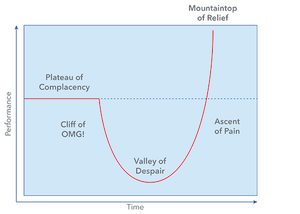
Additionally, a massive barrier to entry in these traditional verticals has historically been adoption friction. The depth of the adoption J-curve has made it almost impossible to force change among industry leaders, causing them to lag decades behind younger verticals. Put another way, the initial loss of efficiency outweighs the future potential upside. This is not a new idea, but many fail to realize that the short-term impacts of COVID-19 will lead these industries to finally make it through that “valley of despair” into a technological nirvana! I’m excited to find a handful of all-star founding teams capitalizing on this theme.

Science-driven companies

I continue to be bullish on backing founders spinning-out deep IP from top research institutions. I’ve worked with a number of companies out of the MIT Media Lab and Harvard Medical, and their core defensibility paired with deep industry expertise builds significant economics moats, mitigating much of the initial risk taken by early stage investors in crowded industries. An enterprise SaaS company selling into the customer experience space, for instance, will have a challenging time building a billion-dollar business without strong technical differentiation.

Staying plugged into academic innovation truly gives one a glimpse of the future. While not every university spinout will be a fit for us, I love geeking out to new and exciting frontier tech.

I am eager to build REMUS over this coming decade, leveraging our agility and entrepreneurial ethos as a firm to support a new wave of resilient founders. We like defying the crowd, following our instincts, and proving them wrong.

If this resonates with you, please reach out.

— Stash

stash (at) remuscap

@StashPomichter